Unified standards, architecture and data formats are key to unlocking intelligent mining
By Guo Zhenxing, Vice President, Coal Mine Team, Huawei
Making the mining industry intelligent requires collaboration across different disciplines. The right architecture can make it happen, allowing different systems to communicate with each other using a unified operating system and consistent data standards. Meanwhile, AI platforms can streamline data, eliminate information silos, and shorten application development cycles.
Here’s a look at the three key technologies that will make this possible.
Key technology 1: MineHarmony, an operating system (OS) that unifies data standards to enable mining equipment to speak the same language
Currently, intelligent mining is plagued by fragmented standards. It is still difficult and costly to connect different enterprise systems, hindering data sharing and data transfer.
On top of that, different types of production equipment use varied interface standards.
MineHarmony is an operating system designed for building fully connected intelligent mines. MineHarmony-based Mining IoT platforms use sensing technology to ensure consistent data standards at data sources and enable synergy among multiple systems.
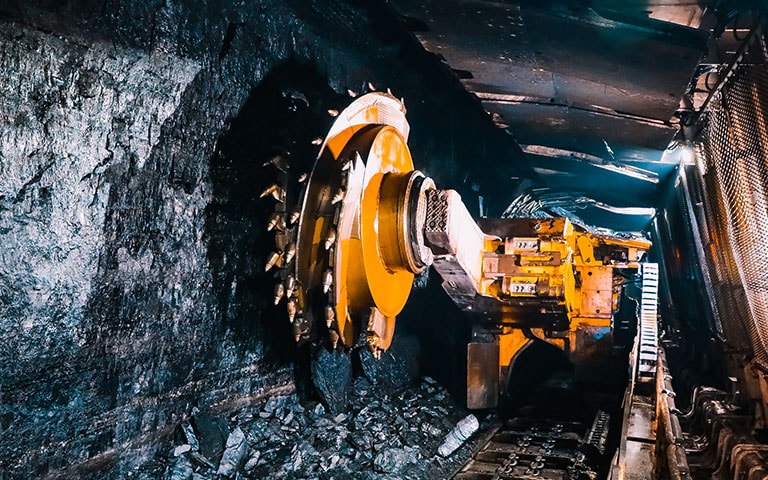
For example, a coal shearer usually uses three operating systems, three communications protocols, and 161 kinds of chips. MineHarmony ensures consistent data protocols and formats and simplifies connections between different equipment, making intelligent collaboration possible.
On the terminal side, MineHarmony enables the upgrade of both old and new sensors, equipment, and portable devices, supporting interconnectivity, synergy, and collaboration between different types of terminals. On the network side, MineHarmony supports smooth data transmission to the cloud through reliable and efficient integrated mining bearer networks built using 5G, F5G, and Wi-Fi 6 technologies. This operating system also realizes cross-system data interconnection, which is key to intelligent system development and application replication in batches, laying a solid digital foundation for intelligent mines.
Key technology 2: Data lakes and digital platforms that streamline data and improve application development efficiency
Equipment running on MineHarmony shares unified communications protocols, so data can be transmitted across all kinds of mining production equipment. But live networks still have massive amounts of equipment data not connected to MineHarmony.
In this case, we can adopt a two-layer architecture consisting of group cloud and edge cloud. Under this architecture, Huawei Cloud provides the ROMA solution (data integration and computing services) to integrate data into the digital platform, and the DGC solution (data governance service) to perform data governance and filtering.
In this way, useful data can be integrated into mining companies’ management systems to improve their daily operating and management efficiency, and ensure their full control over operations. The purpose of pooling data into data lakes, data integration, and data governance is to sort out and accumulate digital assets, and provide comprehensive data analysis. This will allow mining companies to use data assets more efficiently and easily, and make their services more agile.
Since February 2021, Shaanxi Coal and Chemical (Hongliulin) and Huawei have been working on the top-level design of the mining industrial Internet architecture. Now, data from Hongliulin Coal Mine’s production system is fully integrated into the data lake, making data consistent, systems interconnected, and application development easier. Hongliulin has bid farewell to passive and manual production operations and campus management, and embraced a more efficient, unified, and automated approach.
Key technology 3: The Pangu Mine Model that unlocks the value of data and enables large-scale development of industrial AI applications
As AI continues to evolve, it is beginning to see broad adoption by traditional mining and manufacturing companies. But the current model that the mining industry uses to develop AI applications is outdated, because it is developing customized AI applications for each specific scenario that may not be adaptable to other ones.
A common and user-friendly system for AI application development is key to addressing this problem and crucial for supporting wide adoption of AI applications in the coal industry.
In April 2021, Huawei officially released the Pangu Model series, which includes the Chinese natural language processing (NLP) model, computer vision (CV) model, multi-modal model, and scientific computing model. The Pangu Model can find the commonalities between different data items by efficiently extracting knowledge from massive amounts of data. These commonalities can be used to develop a pre-trained model that hosts a super-large number of network parameters, and this pre-trained model can be further fine-tuned to quickly adapt to a wide range of scenarios. Compared with the traditional model, this development approach can increase industrial AI application development efficiency by more than 10-fold, and it delivers better performance.
At the World Artificial Intelligence Conference (WAIC) held in Shanghai in July 2021, Huawei Cloud Pangu Model won the 2021 Super AI Leader (SAIL) Award as it enables universal, generalized, and replicable AI models, presenting a new approach to industrial AI application development.
On October 19, 2021, the AI Computing Center of Jinneng Holding Group’s Intelligent Mining Innovation Lab was officially launched. Huawei’s Coal Mine Team introduced the Pangu Model into the AI Computing Center after thorough research and customer requirement analyses. The Team also has developed the Pangu Mine Model by training large amounts of data from the mining industry. A scenario-based inference model has been created using algorithms trained by the Pangu Model based on video and data of two typical scenarios – underground belt conveyors and tunneling – from coal mines of Jinneng Holding Group.
After several months of testing, this inference model has yielded remarkable results. For example, the inference model can identify over 95% of belt conveyor exceptions in the main transportation system, and over 93% of tunneling violations. The Pangu Model has shortened the development cycle of AI applications in sub-scenarios from months to days.
In essence, the Pangu Model can enable large-scale, replicable, and standardized development of AI applications. It is estimated that the soon to be unveiled Pangu Mine Model will greatly change how the mining industry operates, help develop more scenario-based AI applications, and ultimately enable unmanned and efficient mining operations.
Prospects for the future: Building an AI-centric mining industrial Internet to unlock productivity in the intelligent world
Building intelligent mines is essentially about transforming the industrial system architecture, and a mining industrial Internet that uses unified standards, architecture, and data formats is the only way to make the entire mining production system intelligent.
This requires mining companies to migrate application systems and data to the new industrial Internet in an organized manner. To make this happen, they need to gradually reshape the old architecture and find a new path to upgrade to an intelligent industrial Internet architecture. This means developing new mining applications using cloud-native technologies, the microservice architecture, and DevOps that enables low-code and zero-code agile development.
The road ahead will be long and tough. With the mining industrial Internet architecture, the mining industry can go intelligent through scientific planning and practical initiatives. This will advance the digital economy, and in turn stimulate the real economy and high-quality development of the mining industry.
A conversation with Prof. Mohan Munasinghe, Nobel Peace Prize co-winner and environment economistPlay Video
In 2007, Mohan Munasinghe shared the Nobel Peace Prize with former US Vice President Al Gore. Today, he talks with Transform about what the global mining industry must do to overcome its legacy of pollution and looks at the nexus of sustainability, mining, and digital technology.
Gavin Allen: Hi there. I’m Gavin Allen. And in this third edition of Transform – the e-magazine produced by Huawei that looks into the technological changes that are impacting societies, we are looking at the subject of mining. And against a historical backdrop for the industry of pollution, waste, natural resource depletion, and social exploitation, we’re looking at the question of whether sustainable mining is something of a contradiction in terms. Who better to answer that than the father of Sustainomics, prolific author and world authority on sustainable development, energy, economics, and the environment, the former Vice Chair of the UN Intergovernmental Panel on Climate Change, and, in that role, co-recipient of the 2007 Nobel Peace Prize, Professor Mohan Munasinghe.
I should say that list of accolades and titles that was already quite long could justifiably have gone on considerably longer.
Professor, thanks so much for joining us. Can I start just by asking you about what you think are the primary goals that need to be addressed by the mining industry in the context of sustainable development, both in the short and the long term?
Prof. Munasinghe: Hi everyone. Greetings from Sri Lanka, Gavin. I’m delighted to be on this programme with you. Thank you for inviting me. You’ve asked the most difficult question right at the start. So, let me say that sustainable development is the overarching challenge facing humanity in the 21st century. Meanwhile, mining supplies minerals, which are essential to support all sectors of modern economies and human lifestyles. Finally, remember that digital technologies are heavily dependent on mining, and have major impacts on both the supply and the demand for minerals, as well as on sustainable development. So it is useful to analyse the nexus of sustainability, mining and digital technology, to identify the key issues facing the mining industry.
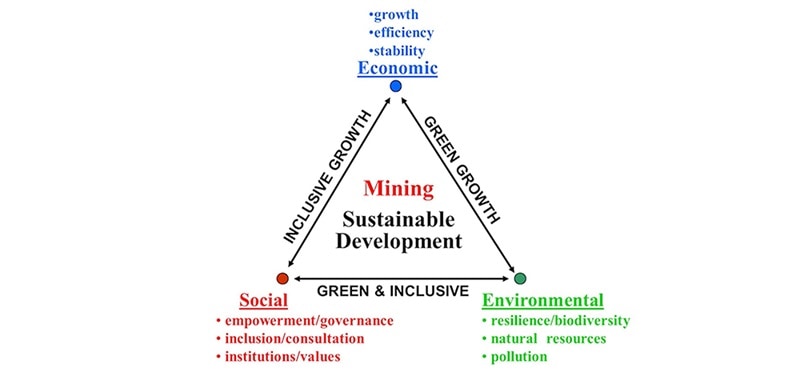
The Sustainomics transdisciplinary framework, which you kindly mentioned in the introduction, first presented at the 1992 UN Rio Earth Summit, is a convenient starting point. The Sustainable Development triangle is a key principle, which states that Sustainable Development can be best analysed according to its economic, environmental, and social dimensions.
Mining activities can enhance economic development, driving growth, creating livelihoods and reducing poverty, helping build key infrastructure, and raising revenues. However, mining depends on extracting a finite, non-renewable resource, and declining ore quality, rising unit extraction and waste disposal costs, and other impacts will undermine future economic sustainability. Next, environmental sustainability is threatened by mining operations, growing wastes and emissions. Finally, social impacts on local and indigenous communities, including exclusion and human rights violations, are causing conflicts with mining companies and threatening social sustainability.
Nevertheless, mining must grow for the foreseeable future, to supply industry and consumers, so we need a broader viewpoint. In the long term, sustainable mining will have to ensure an ecologically viable global mineral supply. Humankind is already overusing planetary ecological resources equivalent to 1.7 Earths. And by 2030, we will need the equivalent of two planets to sustain our current way of life. Secondly, it is the richest 20% of the world’s population who consume more than 85% of planetary resources, which is 60 or 70 times more than the consumption of the poorest 20%. Furthermore, just 1% of the rich emit 175 times more greenhouse gases per capita than the poorest 10%. Third, we have not been able to eradicate poverty in the past, because when the rich overconsume, they are using more than one planet, there are no resources left to help the poor. These are the major issues identified in Sustainomics, and the reason why many promises by world leaders have not been kept.
The UN Universal Declaration of Human Rights, UDHR, in 1948 was signed by all countries. Very good document. Today, we have the Sustainable Development Goals. And all 17 of these goals were already contained in the original UDHR. It highlights that we have not been able to make any real progress on sustainable development for 70 or more years!
If nothing is done, unrestrained market forces, and lack of ethical and moral values will cause more poverty, inequity, pandemics, environmental problems, terrorism, and global system collapse. Nevertheless, the rich will prosper in enclaves, and the poorest will die outside, in misery.
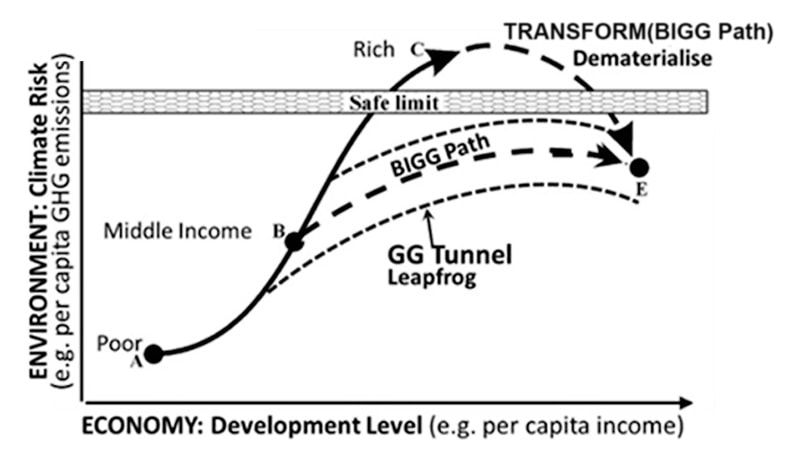
As a practical solution, I proposed the balanced inclusive green growth, or BIGG, path, to convince powerful world leaders and policy-makers attending the Rio+20 Earth Summit of 2012. BIGG starts by reconciling just two goals – economy and environment, instead of the entire triangle. These two were chosen partly because of the common misconception that environmental protection required the sacrifice of economic growth. This is not true. This “green economy” approach is highly relevant, especially for production, where resource-efficient technologies that reduce resource use and costs, while increasing profits, show that economic and environmental goals are compatible.
To understand the essence of BIGG, look at this diagram, consider the relationship between environmental harm, and economic prosperity, measured by GNP.
Poor nations are at point A – with low income and low emissions. Rich nations at point C are already unsustainable and exceeding safe ecological limits. Wealthy countries can re-balance environment and economy to reach sustainable point E, by reducing environmental resource use while maintaining their good quality of life. Nobody has to become poor. They could use new resource efficient technologies, lifestyle changes, etc., that dematerialize modern economies. This is called green growth. Meanwhile, emerging nations at intermediate point B should learn from the past by innovating. They could go through the green growth (GG) tunnel to also reach point E, without exceeding safe limits – by avoiding the unsustainable path of rich countries. Sustainable mining must follow this BIGG path which harmonizes economy and environment.
However, we must go beyond green growth, to also satisfy social goals. In the second step, green growth is further improved by adding pro-poor, inclusive and inequality-reducing policies, to create the balanced inclusive green growth (BIGG) path – also relevant for sustainable mining. This process fully harmonizes the sustainable development triangle: economy, environment and society.
Sustainable production and mining need to be complemented by sustainable consumption and lifestyles. This will help us avoid Jevon’s Paradox, which says that every improvement in resource-saving technology results in large increases in consumption of the cheaper products, ultimately resulting in even greater resource use. To avoid resource depletion, a virtuous cycle of sustainable producers and sustainable consumers must be encouraged, to build a sustainable society and markets.
Gavin Allen: It’s really interesting. There’s a lot of very sobering statistics and insights within that answer, and obviously a lot of very important themes that we’ll come back to later in the interview. Can I ask on a specific basis, what do you think the potential is for AI in mining to help transform mining?
Prof. Munasinghe: I think it is more relevant to respond to this very important question, within the broader context of the digital technology revolution, DT.
which will be a major driving force in reviving the post-pandemic global economy. COVID-19 has in fact accelerated the growth of DT and touchless transactions, while enhancing efficiency and reducing costs in most sectors. It is clear that in the post-pandemic world, DT will help to resuscitate the global economy by accelerating the recovery of damaged supply chains and creating more livelihoods. As a global DT leader, Huawei is well positioned to play a key role in this transformation.
Undoubtedly, DT will yield both benefits and risks, as we move forward. First, economic gains include increased productivity and growth, as well as greater variety of goods and services. Economic risks include widening the gap between the rich and the poor, greater risks of macroeconomic instability, because of unpredictable financial and trade flows, and fiercer competition and risks for firms in a rapidly evolving business environment.
Second, environmental advantages of DT include reduced natural resource use through more efficient production, and improved technologies for pollution management. Risks arise from the generation of more economic growth that causes uncontrollable consumption and production, which I call Jevon’s Paradox, leading to more pollution and natural resource use. Furthermore, greater demand for DT will require more mining and energy use, while causing more pollution, for example, through e-wastes.
Finally, social benefits include more employment and income, especially for the poor, increased participation and empowerment, via improved communications, social media, and greater access to information. Potential dangers include greater exclusion of the poor and increasing inequality, destructive use of information, and more marginalization of indigenous knowledge, as well as reduced cultural diversity.
Digital technology itself, including AI, can help improve mining sustainability. First of all, it can generate environmental, social and economic data along supply chains, and use this data to minimize environmental and social harm, while maximizing economic gains. Second, it can improve the circular economy, by reducing waste, recycling and redistributing waste for alternative use. Third, technology products could be designed to minimize technological waste and improve recyclability. Fourth, digital technology can be used to increase consciousness and encourage innovation that promotes sustainable goods and services on an even larger scale.
Automation has potential to improve the mining industry in terms of productivity and human safety. Automated machinery can improve productivity, since AI can gather and analyze data much faster than humans – by reducing operating costs, monitoring and controlling mining processes involving ventilation, energy use, transport, waste, etc., while also improving exploration and resource discovery; advancing raw material sorting, and so on.
In terms of safety, AI allows machines to access areas and environments that may be too dangerous for humans, thereby improving safety and security. Overall, AI will enhance risk management. More efforts should be devoted to applying DT and AI to protect the environment and improve human safety and well-being along the entire supply chain.
Gavin Allen: One obvious goal would be to achieve zero coal mine deaths. Does that mean the primary challenge should be to eliminate the need for any coalface worker, and sometimes unreliable safety supervisors?
Prof. Munasinghe: A tricky question, but reducing coal mine deaths and injuries should be one of the main goals, while supporting broader efforts to reduce the unequal distribution of bargaining power and wealth among the parties involved in coal supply chains, and to minimize environmental harm. This includes unfair distribution of costs among the supply chain players, for example, workers and communities at the bottom of the chain have to bear disproportionately high impacts of environmental pollution. The death and health issues caused by pollution externalities may not be immediate but may occur after several years and are often ignored by policymakers, public and private.
Gavin Allen: I guess the obvious problem is that more automation means fewer workers, which is safer, but obviously means raising unemployment potentially. Is that a price worth paying?
Prof. Munasinghe: Again, this issue also needs very careful assessment. Greater automation will allow greater economic prosperity, but like any other disruptive technology, decisionmakers in government, business, and civil society, especially scientists, must work together to facilitate a smooth transition. For example, preparing the old and the young workforce for new kinds of jobs. “ Is the price worth paying?” – this is not just a simple question of having one group of people paying the cost while another reaps the benefit. The technological transformation, unlike the recent pandemic, has given us enough time and ample knowledge which allow us to design for the future. If we plan properly, we can protect everyone without any one group having to pay too high a price. Innovative technology must pay equal attention to social and environmental concerns, because every life does matter.
Gavin Allen: Isn’t there a risk that innovation, of which we’ve spoken in technology, could make mining more efficient, cheaper, and safer, then it will therefore increase profitability, and actually ironically extend the life of an industry that many see as environmentally divisive?
Prof. Munasinghe: True, but the mark of wisdom is to see something as a part of the solution rather than as a part of the problem. We have a goal to reduce carbon emissions and burning coal is one of the main causes of it. Therefore our goal must be to reduce total emissions from coal extraction and burning. Mining company profits should not be exempt from the global externality costs of potential climate change damage due to greenhouse gas emissions. The economic cost-benefit analysis should incorporate, as much as possible, local, regional environmental pollution and social damage costs.
To preserve planetary health, sustainable mining must adjust to respect these constraints.
Gavin Allen: Do you think we are potentially approaching this all wrong, or from a wrong end, that rather than seeking to kill off coal mining, can it actually be transformed into a truly green industry, which is what you are effectively alluding to? What would that take? I mean has there been too much focus on ending mining, rather than making it more sustainable? Particularly, as it is so important, many of the resources are so important to the pursuit of modern technology, whether it is EV batteries or wind turbine magnets. So mining still vital and actually thriving.
Prof. Munasinghe: Absolutely correct, Gavin. The whole purpose of BIGG is not to kill industries that provide jobs for millions of workers, but rather to transform production and consumption onto a BIGG path that will be more sustainable and green. But there are no piecemeal targets for mining. They must fit within a broader integrated framework of balanced inclusive green growth and the global SDGs.
Mining of minerals essential to achieve BIGG must continue, including rare earths, cobalt and lithium for mobile phones, electric vehicles and wind turbines, etc. We also need an economic transition period to phase out fossil fuels, including coal and oil, and replace them with clean energy. Clean coal technologies, carbon capture and storage, and other methods will also play a role during the transition. Sustainable mining will also place more focus on environmental and social impacts over the entire product cycle. AI and digital technology could play a key role in developing smart, sustainable mining approaches that could help integrate the advances made by different mining companies in diverse parts of the earth within a comprehensive platform based on a unified architecture and standards. This idea is similar to the concept of smart sustainable systems I proposed for cities in 2015 to integrate a range of urban services within a unified platform usable around the world. If Huawei is working on that, more power to them.
Gavin Allen: What responsibility do you think that the mining industry and those involved in this industry have to the wider community?
Prof. Munasinghe: I think, to be frank, they are fully responsible for the destruction of local communities, together with compliant and often corrupt governments who have failed in their duty to protect the victims. In an ethical and sustainable world, a corporation should not expect to reap financial benefits through poor working conditions or by imposing more widespread pollution externality costs on others. Sustainability should be the norm.
The reality is different. Powerful mining companies negotiate special financial terms with governments in ways that benefit them, while avoiding accountability or responsibility for costs imposed on workers and the general public due to social and environmental externality impacts. Unrestrained and unregulated free markets undermine the sustainability of the entire system. This short-term view is sufficient for the firms to accumulate huge benefits for themselves, but creating big sustainability problems for us all in the future. Balanced inclusive green growth will require major changes in the current economic system and power structures.
Gavin Allen: It was interesting that last year at COP26, the gathering of nations to talk about climate change, there was a big debate. Some dismay, I think, in the west, or certainly west observers, that the idea of phasing out coal got diluted, in some people’s eyes, to phasing down coal. What was your own reaction to that?
Prof. Munasinghe: Fossil fuels cannot be phased out immediately, as we need a transition time for the world to maintain life during the transition time. So arguing about wording is not the way forward. In fact, I am often impatient with what happens at these COP gatherings, and I have attended many of them, because of the time spent on exact wording, without getting down to action. Coal is recognized as one of the main sources of carbon emissions and therefore we will have to reduce the coal mining to balance the CO2 within safe limits to achieve 1.5°C or even 2°C. Eliminating coal too quickly, on the other hand, will cause energy shortages that will affect the poor, while excessive greenhouse gas emissions from continued coal burning will worsen global warming that also affects the poor disproportionately. It is a tightrope. The coal phase-down or phase-out path within the BIGG trajectory will need to balance such conflicting concerns. What needs to be eliminated as soon as possible, is the rich obtaining of free pass and large profits from the coal industry, exempt from local and global environmental pollution externality costs that are borne mainly by the poor.
As the global push towards fossil-free energy sources, market mechanisms and so on will make it prohibitively expensive for coal producers to continue with coal mining, we need to make sure that coal and fossil energy will be still available until viable alternative energy sources are developed during the transition. As the life time of a coal mine is generally considered around 2 or 3 decades, coal investors must carefully assess the financial as well as reputational or branding and environmental risks when pursuing new coal mining projects. Each country should have the right to follow its own BIGG path, focusing first on local environmental concerns, which affect their own citizens – air and water pollution and land degradation, but staying within the global limits for critical pollutants like greenhouse gases.
Gavin Allen: What impact do you think increasingly polarized east-west geo-politics have on efforts to achieve greater sustainability in mining? Can rhetorical pressure drive and accelerate sustainability or, counter-intuitively, or counter-productively in fact, does it lead to a sort of determined resistance to being bullied on the parts of some countries?
Prof. Munasinghe: You bowled me a googly there, Gavin, in the cricketing parlance, or a curved ball, as the Americans say. The world is going through a major geo-political transformation, and how humanity manages it will affect our progress towards BIGG and achieving the SDG, including sustainable mining.
I think China will play a key role as the economic powerhouse of the world, champion of open trade, and leader in digital technology, with Huawei as a key contributor. As a global digital technology leader, China is becoming a super-connector that enhances east-west and south-north links, thereby facilitating global sustainable development along the BIGG path. By helping to better connect sustainable consumers and sustainable producers in the digital marketplace, DT can accelerate the growth of sustainable lifestyles and behaviors, and reward also sustainable mining practices upstream in the supply chain. It will make the world a better place for us all, as well as for future generations.
Finally, DT will facilitate the Belt and Road Initiative and help the ongoing transition to a more sustainable, peaceful and harmonious, multi-polar world order, built on mutually cooperative power centers like the Shanghai Cooperation Organization, the G77+China, the G20, EU, and so on. The new global order will rely on soft economic power and mutually beneficial trading relationships, facilitated by the use of multiple global currencies, the Chinese yuan, Euro, Japanese yen, US dollar, and so on. Most countries would welcome such a shift away from the existing system that often relies more on hard military power, punitive sanctions, and a single global currency, the US dollar. Such a trend towards a more sustainable and conflict-free planet will be universally welcomed, given the depressing current realities. Even while COVID-19 ravaged the world in 2020, the world’s billionaires increased their wealth by 11%, while billions starved. Also, the world in 2020 spent almost US$ 2 trillion on armaments while only US$ 161 million, a fraction of that, was spent to help the poor. A travesty.
Gavin Allen: Final, final question then. As you said, you have raised so many huge issues. I do not know if this takes it even bigger than the globe. I saw a quote recently about ambitions for mapping the terrain of the Moon and Mars. Do you think our sustainability concerns should go beyond concerns for just our own planet?
Prof. Munasinghe: Yes, another tricky question. But sustainability should be the dominant theme wherever humanity ventures. Stabilizing the future of the 7.5 billion people on earth should be our priority now. But meanwhile, exploration of other planets and unexplored regions of the earth, like the Polar Regions and deep oceans, for example, should be done on behalf of us all, since it is humanities’ common heritage. The inequality and absurdities of the current world should not be repeated in new regions and on new planets, as they open up. Thank you very much, Gavin.
Gavin Allen: Thank you, Prof. Munasinghe. I’m sure the universe can wait. We’ll try and get the earth correct first and tackle that issue first. But thank you very much for joining us.
A Q&A session with Ulrich Sendler, Author and technology analyst
Q: It has been nine years since your book “Industrie 4.0”, was published. What has and hasn’t changed since that initial vision and what does Industrial Internet of Things mean to you today?
A: Industrie 4.0 was an initiative of the German industry and research under the guidance of the German Academy of Technical Science and Engineering (Acatech), and soon also under the guidance of the government. As I put it in my book, it was about the total digitalization of all processes and methods in the industry, from the idea of a product through engineering, production planning and production to sales and the product use at the customer’s side. One very important aspect was and is the possibility of new services that are possible because of the availability of the Cloud and the chance to connect products as well as users with each other and/or with anything. IPv6, the internet protocol version 6, makes this possible through an almost endless number of Internet connections with a potential IP address for every product, not only for every human being.
We are far away from achieving this. It is still almost only the large companies with thousands of employees that are trying to implement Industry 4.0 standards. Meanwhile, we are talking about the digital twins of products and processes being developed which help to simulate the behavior of products as well as in real life.
But the vast majority of the industry is still working with traditional methods and processes, using software and internet only in enhancing productivity and velocity. Very few new services have been invented and installed, like predictive maintenance and Product as a Service.
What has changed? The initiative has defined proper standards which are widely used in some industries, mainly in the bigger companies. As I mentioned as my fear in the book, the industry was focusing on the optimization of production efficiency instead of completely changing the processes and finding new business models especially in the field of service.
For the majority of small and medium businesses, it is not the question of having the right software or Cloud provider. It is identifying the new possibilities and business models, based on the very good products that they have and are successful with. The initiative I 4.0 was too much focused on the large industry groups. The SME’s feel left alone.
Q: Industry is not totally digitalized, and you observe that it’s mostly big companies that are benefiting from it. So what can be done to pull – or even push – SMEs into digitalization so that they benefit alongside their larger counterparts?
A: The only way that I see is through networking and sharing their experiences with experts. That’s what I am trying to offer. But the result up to now is very poor.
Q: What has been the impact of the apparent international retreat into silos on the development of Industrial IoT?
A: I think that has not made a big difference to IoT and Industry 4.0. I’m not talking here about the difficulties in accessing the right, well-qualified employees and partners in the field of software development. There were many thousands of people doing this job in Russia and especially in Ukraine, that are not available any more for maybe many years. Even if the political and economic relationships change dramatically, it is still – and even more than ever – the power of the digital, virtual world and the possible connection of every company and every product and service via the Cloud that can enable collaboration across the borders. Although the partners working together are not the same as before.
Q: In your latest book, you discuss the application of AI in industry. What is the potential benefit of AI in the traditional energy industry, for example mining?
A: One important point that I make in this book is that the potentials of AI for the industry are very much over-estimated. It is again more about the optimization of production efficiency than real innovation with new business models and new services. For critical processes, AI is also a danger and should be used very carefully.There is no way to take the responsibility for critical decisions in production away from human beings to AI. AI is principally – and cannot be anything else – statistic average. What you need for critical decisions is exact data and “yes” or “no”, instead of, say, “98.1% yes”. AI cannot deliver that. It is the providers of Cloud platforms and AI microservices that sometimes make it sound like it will be different. And sometimes decision-makers in the industry would like to believe it. That is the over-estimation.
Q: Even if currently over-estimated, what is the potential benefit to industries such as mining of AI and Industry 4.0? Can it help the wider process – not just extraction but the sustainability/life cycle of the fossil fuels themselves?
A: The benefit of using AI lies in the replacing of humans in calculating, remembering and identifying masses of data. That is something the computer is better at, like image recognition.
By Ege Tekinbas, Senior Policy Adviser, Intergovernmental Forum on Mining
Mining technology has constantly evolved over the centuries, but today’s emerging technologies are rapidly re-shaping the nature of mining work as never before. Workers will surely feel the knock-on effects—but will those effects change the gender dynamics of the traditionally male-dominated mining workforce?
It’s tempting to be optimistic. One might assume that new ways of working might challenge ideas prioritizing the physical strength of workers and thereby push large-scale mining towards gender balance. However, examples from the past indicate that while such advances may gradually upskill the mining workforce, our research suggests they may also increase its masculinity if new developments are tailored to suit male workers.
As the increasingly digitized large-scale mining sector is set to ramp up to produce the copper, lithium and other critical minerals for low-carbon energy transitions, the Women and the Mine of the Future (WMF) project has set out to shed light on the gendered employment landscape for large-scale mining via granular gendered data to help stakeholders assess, anticipate, and address inequities with evidence-based policies and programs.
Why does gender equality matter in a mine? Across the globe, large-scale mining offers relatively high wages to workers. It also represents one of the most male-dominated industries, with women making up only 5% to 15% of workers. And while mining may be a small sector in terms of total employment in a nation, it is often the biggest and most important employer for many mining communities. Balancing access to mining jobs in can bring secure livelihoods to women and their households while engendering trust with authorities and industry.
Decision-makers need to understand the status quo for women in mining if there is any hope to address longstanding inequities during the next generation of large-scale mining that will be characterized by digitization, automation, machine learning, artificial intelligence, and more.
Accordingly, the first phase of our WMF research project is to establish a baseline gender profile for workers in large-scale mining. A clearer picture of the gender dynamics on the ground today can inform actions to ensure new mining technologies do not maintain or intensify existing inequities.
This year, we released uniquely granular and comparable data on the mining workforces in 10 diverse nations, drawn from household surveys collected by the International Labour Organization.
Digging into the Data Data from Chile suggests that the real median income for mining is triple that of workers in the broader economy. However, less than 10% of total employees in the Chilean mining sector are women. In Peru, we see that women represent only 5% of the core mining jobs, and 10% of all mining jobs. Sweden is an exception where female workers represent a quarter of the total mining workforce – notwithstanding the fact that the mining sector employs only 0.2% of workers in the country.
Even though women often make up a small fraction of the total mining workforce, the data shows there are some roles where they clearly dominate: clerical and administrative occupations. In Sweden 73% of clerical support workers are women’; in South Africa, 52%. Data from Canada shows that women are underrepresented in almost all occupations, except human resources and financial roles–positions that are particularly at risk to become obsolete as new technologies are adopted.
On the positive side, women are more likely to be qualified in the fields of natural and physical sciences such as geology, environmental engineering, and natural conservation. As investors, operators, and other stakeholders increasingly call for sustainability, staff with these qualifications will be in high demand. Some indicators are already hinting at this trend, such as data from Brazil, where we see female dominance and even a reverse gender pay gap that favours similarly qualified female workers in agriculture, forestry, hunting, and fisheries.
One of the most surprising findings from our preliminary data is that women have a much higher level of education compared to the men they work with. In Mongolia, around 42% of women in mining have a bachelor’s degree or higher, compared to 29% of men. In Brazil, 56% of women have advanced education while almost 99% have attained education above the basic level. Women in the Canadian mining sector similarly have higher levels of education, resulting in lower unemployment rates than women in other industries.
We also see that women are significantly underrepresented in programs that train technicians, tradespeople, machine operators, and drivers. This signals a need to support female workers to acquire the skills required to fill these roles that have a low barrier to entry and are evolving to adapt to new mining technologies.
And while women may have higher-level educational attainment, our research shows that women tend not to be trained in STEM fields that would allow them to find secure, high-paying jobs in mining. In Australia, the roles where women represent more than 20% of the mining workforce are those that require non-STEM qualifications. In Canada, women constitute 34% of the mining employees with non-STEM degrees whereas this ratio is 11% for all industries. Interestingly, Canadian women with STEM degrees prefer other sectors over mining as they have higher representation in other industries. Similarly, in South Africa, the percentage of women graduating with STEM degrees exceeds their representation in the mining workforce. These trends show that while increasing women’s mining-related education is important, it may only be a partial solution unless other entrenched gender inequalities in mining, including the gender pay gap, are not properly addressed.
Looking ahead Forecasting the potential gendered implications of new mining technologies is no easy task. But it’s safe to assume we can’t expect the technology alone to bring equity to the mining sector. It will take good policy based on sound evidence.
The preliminary data from Women and the Mine of the Future offers insights that must be considered by governments, industry, and other stakeholders in large-scale mining. The next phases of our project will use the data to assess how these technology-driven trends will affect women in mining and related supply chains and outline key barriers to increased participation by women in mining. Finally, we will publish guidance and implementation resources to inform decision-makers in a position to make policy and impact the mining industry.
Ege Tekinbas is Senior Policy Advisor, Gender Equity with the Intergovernmental Forum on Mining, Minerals, Metals, and Sustainable Development (IGF). Women and the Mine of the Future is a collaborative project to increase understanding of the status quo for women in mining, so stakeholders can anticipate, assess, and address gendered impacts as mining evolves. The project partners are the IGF, International Labour Organization (ILO), International Women in Mining (IWiM) and the Environmental Governance Program of the United Nations Development Programme (UNDP) and the Swedish Environmental Protection Agency (SEPA).